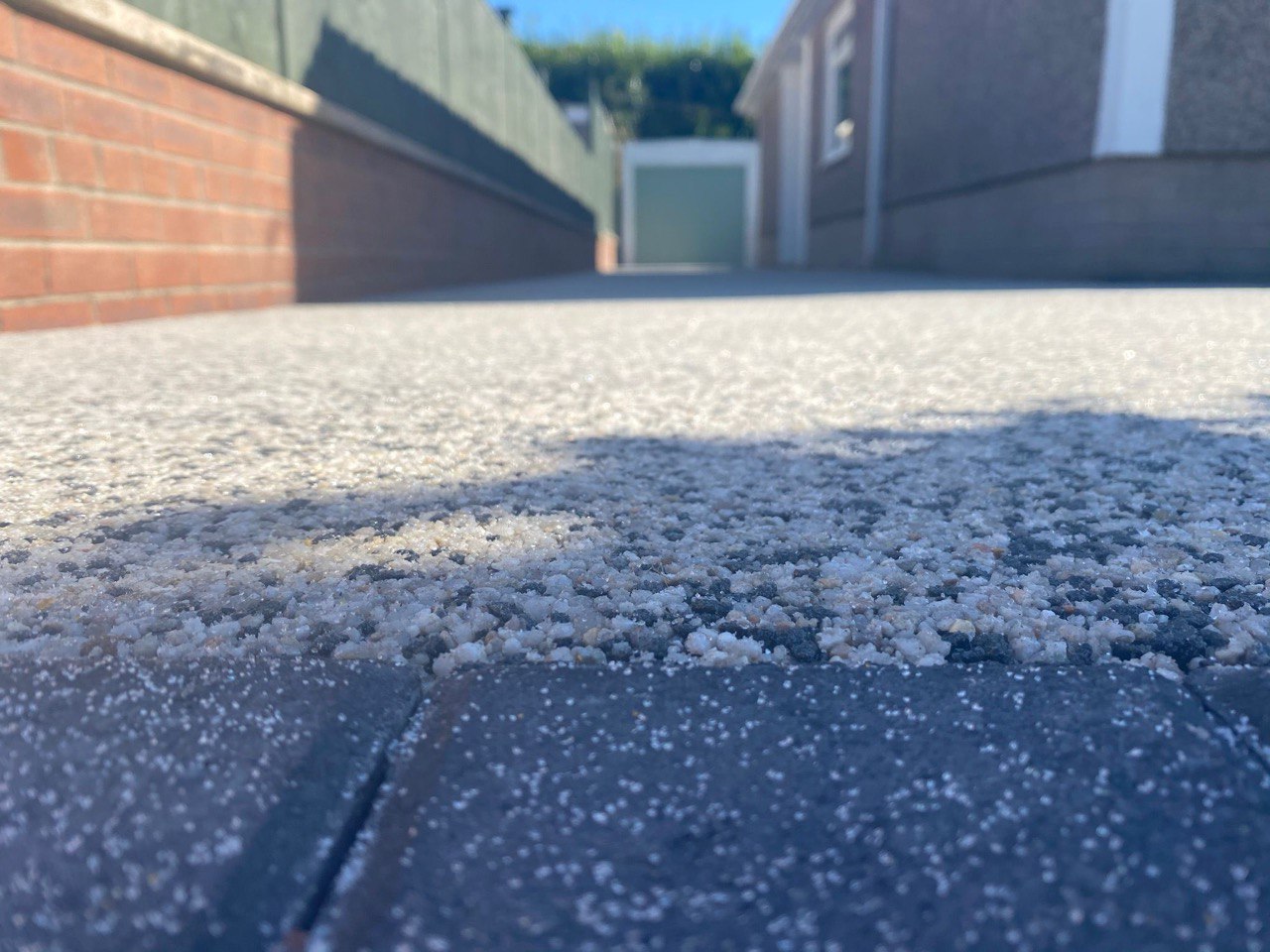
Resin Driveway Repairs: Can Damaged Areas Be Fixed?
Resin driveways are popular with homeowners because they provide a smooth, attractive and practical surface that can complement a wide range of properties. When correctly installed over a suitable base, a resin-bound driveway can perform reliably under everyday vehicle and pedestrian use. However, no driveway surface is completely immune to deterioration.
Cracks, loose aggregate, damaged edges, depressions and localised surface defects can occasionally develop. When this happens, homeowners often assume that the entire driveway will need replacing. In many situations, this is not necessarily the case.
For homeowners in New Romney, Kent, the key is determining why the damage has occurred and how much of the driveway has actually been affected. At New Romney Driveways, we assess both the visible resin surface and the condition supporting it so that repairs can address the real problem rather than simply disguisising the symptoms.
Can a Resin Driveway Be Repaired?
Yes, many types of localised resin driveway damage can potentially be repaired.
Whether repair is appropriate depends on several factors, including:
- The type of damage
- The size of the affected area
- The condition of the surrounding resin
- Whether the base remains stable
- The cause of any cracking or movement
- Whether drainage is contributing to the problem
- How widespread deterioration has become
A small damaged section surrounded by a stable driveway presents a very different situation from cracking and settlement occurring across several areas.
This is why assessment should always come before deciding on the repair method.
What Types of Resin Driveway Damage Can Occur?
Understanding the type of deterioration helps determine what work may be required.
Common problems can include:
Localised cracking
Individual cracks may develop where movement has occurred beneath the resin or where the surface has been subjected to unusual stress.
Loose aggregate
Sections of the surface can occasionally begin losing aggregate, leaving the finish rougher or less consistent.
Edge deterioration
Driveway edges can become damaged where support has weakened or repeated vehicle movement places additional pressure on vulnerable areas.
Depressions and settlement
Sunken sections may develop if the supporting construction beneath the resin has moved.
Localised surface damage
A particular area may become damaged while the remainder of the driveway continues performing correctly.
Each of these problems requires a slightly different assessment.
Why the Cause of the Damage Matters
Repairing what can be seen is only worthwhile if the reason for the deterioration is also understood.
For example, suppose a crack has appeared because the supporting base underneath the resin has moved. Simply treating the visible crack may improve the appearance temporarily, but it does not necessarily prevent further movement.
The same applies to a depression caused by settlement. Adding material to the surface without correcting the unstable section underneath would not address the underlying cause.
A professional driveway repair should therefore answer two questions:
- What has become damaged?
- Why did the damage develop?
The second question is often the most important for achieving a dependable result.
Can Cracks in Resin Driveways Be Fixed?
Some cracks can be repaired, but not every crack should be approached in the same way.
A small, isolated defect where the surrounding driveway remains stable may be suitable for localised repair.
However, several cracks appearing in different areas can suggest something more significant is happening beneath the surface.
The pattern of cracking can provide useful information. A professional assessment may consider whether the crack is isolated, whether it is changing and whether nearby areas show signs of movement.
If the underlying construction is responsible, that issue may need to be corrected before the resin surface is reinstated.
Why the Base Is So Important
The resin-bound layer is only the visible part of the driveway.
Its performance depends heavily on the construction underneath it. A properly prepared and stable base supports regular vehicle movements and helps the finished surface maintain its intended shape.
Problems beneath the resin can eventually become visible above it.
Warning signs of potential underlying movement include:
- Cracking that repeatedly returns
- Sunken sections
- Several changes in surface level
- Widespread unevenness
- Movement around heavily used areas
Where these symptoms are present, simply repairing the resin surface may not provide an adequate solution.
Repairing a Sunken Resin Driveway
If one part of a driveway has dropped below the surrounding surface, the cause needs to be established before reinstatement.
Settlement can indicate that the supporting layers beneath the resin have moved or become less stable.
The appropriate approach may involve removing the affected surface so the underlying construction can be examined. Once the supporting area has been restored appropriately, the resin surface can then be reinstated.
Correcting the foundation is essential because the finished driveway relies on the stability beneath it.
What About Loose Stones on a Resin Surface?
Resin-bound aggregate should form a firm, consistent surface.
If noticeable amounts of aggregate begin loosening from a particular area, it is worth having the driveway assessed.
Small, isolated deterioration may be suitable for localised attention. If aggregate loss is occurring extensively, however, the wider condition of the surface needs to be considered.
The objective should be to determine whether the issue affects one section or reflects more general deterioration.
Damaged Driveway Edges Should Be Addressed Early
Edges can be particularly vulnerable because they mark the transition between the driveway and surrounding ground, lawns, paths or other surfaces.
If edge support deteriorates, the resin may begin breaking away or becoming unstable.
Vehicle tyres repeatedly crossing an unsupported edge can make an existing weakness progressively worse.
Early attention can help prevent a relatively small damaged section from spreading further into the main driveway.
A professional repair should consider both the resin and the support around the affected edge.
Water Can Be an Important Clue
When assessing resin driveway deterioration, it is important to consider how water behaves across the surface.
Areas where water repeatedly collects can sometimes indicate:
- Changes in driveway levels
- Localised settlement
- Drainage problems
- Movement beneath the surface
The visible water itself may not be the original cause, but it can highlight areas that deserve further investigation.
Repairing a damaged section without considering drainage and levels could leave an important contributing factor unresolved.
Can Just One Section of a Resin Driveway Be Replaced?
In appropriate circumstances, replacing a defined section can be more sensible than renewing the entire driveway.
The damaged resin can be removed back to stable surrounding material, allowing the affected area and underlying construction to be properly prepared before reinstatement.
This approach can be particularly suitable when deterioration is genuinely localised and the remainder of the driveway remains dependable.
The aim should not necessarily be to make the smallest possible patch. Instead, enough material should be removed to create a sound basis for the repair.
Will the Repaired Area Look Exactly the Same?
Appearance is an important consideration with resin repairs.
An existing driveway has been exposed to weather and regular use, meaning its appearance may have changed gradually since installation. Newly installed resin and aggregate can therefore appear slightly different from older surrounding material.
Using an appropriate aggregate blend and carefully defining the repaired section can help create a neat result, but a localised repair cannot always be expected to become completely invisible.
A professional assessment should consider both the structural effectiveness and finished appearance of the proposed work.
Why Simply Covering the Damage Is Not Enough
A repair should restore the affected area rather than merely hide it.
Applying new material over an unstable, cracked or deteriorated section without suitable preparation can leave the underlying weakness in place.
Proper repair may involve:
- Identifying the limits of the damaged area
- Removing unsuitable material
- Checking the supporting construction
- Correcting localised instability where required
- Preparing the repair area correctly
- Reinstating the resin surface appropriately
Good preparation is fundamental to the quality of the finished repair.
When Does Damage Become Too Extensive for Localised Repairs?
Localised repairs are most appropriate when most of the existing driveway remains in good condition.
If deterioration has become widespread, continually repairing individual sections may stop being practical.
Signs that a more comprehensive approach may need consideration include:
- Cracks throughout multiple areas
- Extensive surface deterioration
- Several sunken sections
- Widespread instability
- Repeated failure of previously affected areas
- Significant changes in levels
- Large sections of loose aggregate
In these circumstances, the complete driveway should be assessed rather than viewing each defect independently.
Early Attention Can Help Preserve the Existing Driveway
One advantage of dealing with resin driveway damage promptly is the opportunity to preserve surrounding areas that remain serviceable.
A small damaged edge or isolated crack may become more extensive when exposed continually to traffic and weather.
Having the problem assessed early allows homeowners to understand whether a straightforward localised repair is possible before deterioration spreads.
This does not mean every small imperfection requires extensive work. It simply means changes should be investigated when they indicate genuine surface or structural deterioration.
Professional Assessment Prevents Guesswork
Two resin driveways with similar-looking cracks may require completely different solutions.
One could have a minor localised defect, while the other could be experiencing movement in its underlying construction.
This is why professional assessment provides real value.
The condition of the surface, base, edges, levels and surrounding driveway should be considered together. Once the cause and extent of the problem are understood, the repair can be planned appropriately.
Professional Resin Driveway Repairs in New Romney
At New Romney Driveways, we provide professional driveway services throughout New Romney, Kent, including the assessment and repair of damaged resin driveways.
Our approach focuses on understanding what has caused the deterioration before determining what work is required. Where damage is genuinely localised, an appropriate repair can help preserve the serviceable sections of the existing driveway.
Where cracking, settlement or surface deterioration indicates a broader problem, we can assess the wider construction and recommend an approach suited to the actual condition of the driveway.
Conclusion
Damaged areas of a resin driveway can often be repaired, particularly when the deterioration is localised and the underlying construction remains stable. Cracks, edge damage, loose aggregate and isolated surface defects do not automatically mean that the entire driveway needs replacing.
The most important consideration is the cause of the problem. If movement, settlement or instability beneath the resin is responsible, repairing only the visible surface may allow the damage to return. Effective repair therefore depends on accurate assessment, proper preparation and attention to both the surface and the construction supporting it.
For homeowners in New Romney, Kent, New Romney Driveways provides professional resin driveway services focused on restoring damaged areas appropriately and preserving sound sections wherever practical. If your resin driveway is cracked, uneven or showing signs of deterioration, contact our team to arrange an assessment and determine the most suitable way forward.
Call us on: 01797 330 699
Click here to find out more about New Romney Driveways
Click here to complete our contact form and see how we can help with your driveways.